SOME SAY WE WILL NEVER WIN
The People Who Inspire
I am always searching for new ways to communicate ideas and tell stories — driven by a deep appreciation for history and a stubborn desire to remember the people and moments that time tends to erase. Over the last several months, I have been writing a few poems and songs about the fight against Lava Ridge and the projects that followed in its wake. This song is a story about everyone who packed a public meeting, signed a petition, or stepped up to a microphone and made their case to people who had already made up their minds — every backroads person in the Magic Valley who refused to be silent, refused to be bought, and refused to accept that land their family had worked for five and six generations could be ruined by someone who will never have to live with the consequences. At the center of that inspiration is a key figure in that fight — a man who has never stopped fighting. The song I wrote and this article are both were written with a couple of men in mind.
One of the Men that Inspired the Song
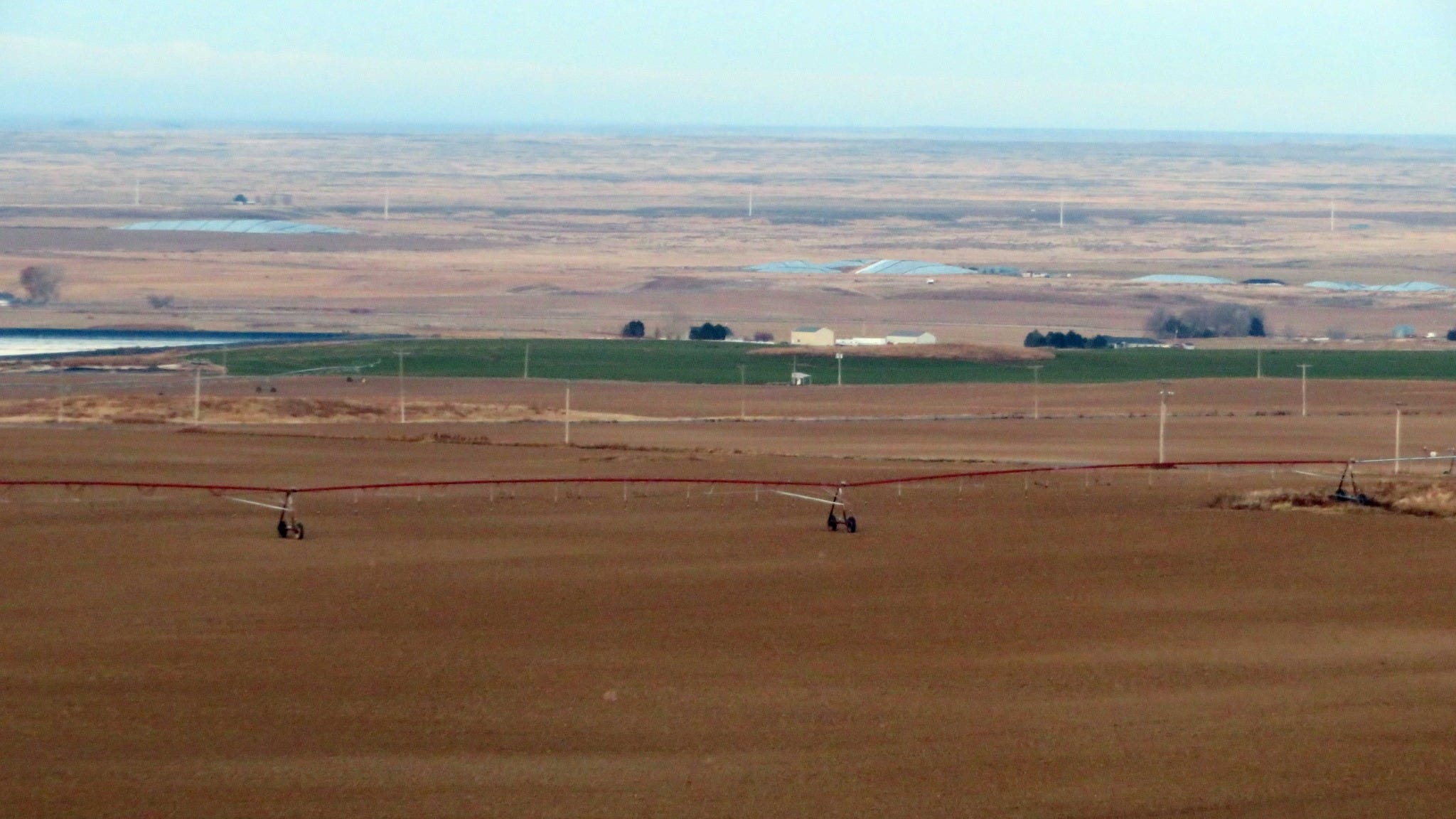
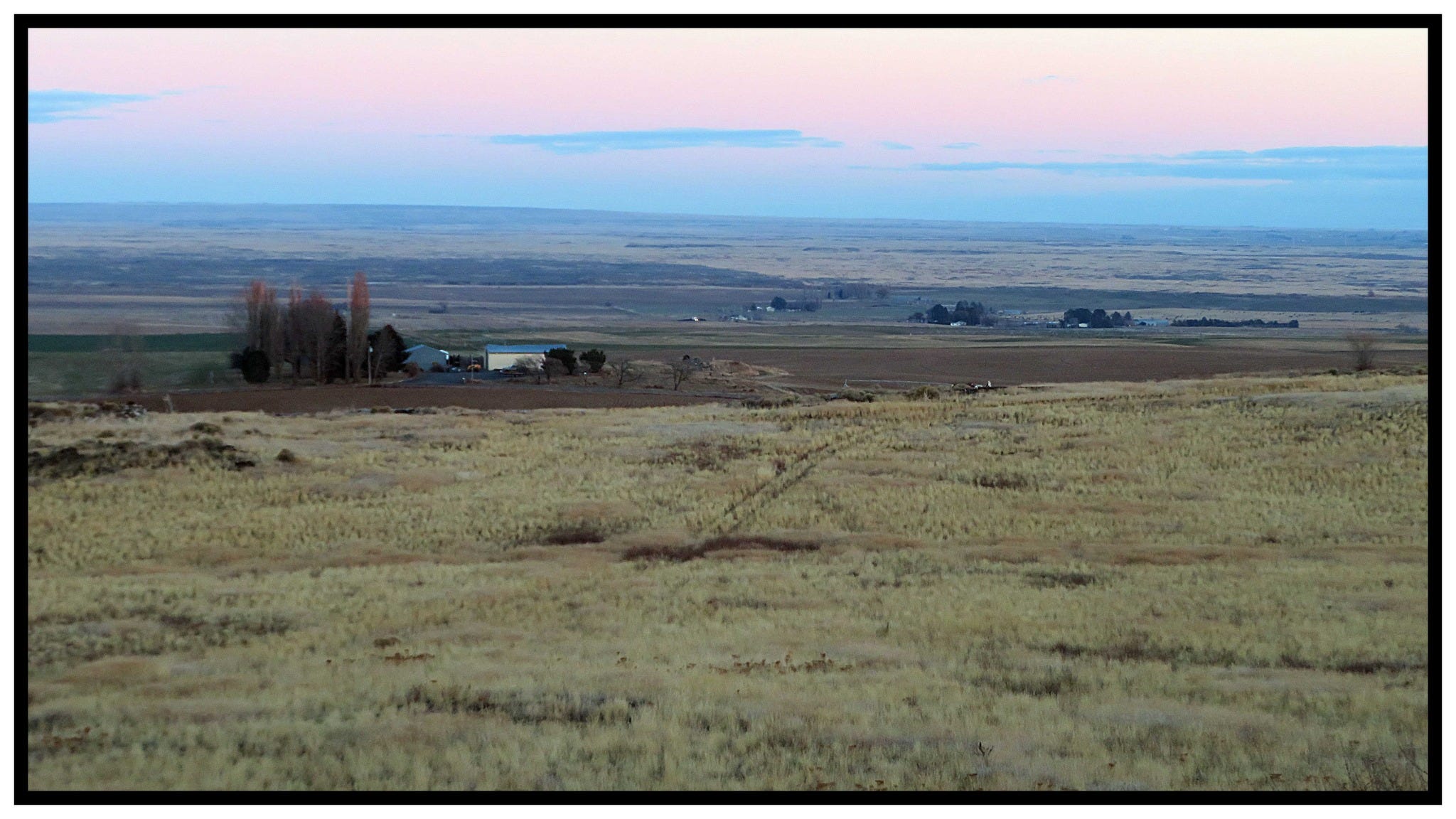
From the edge of his 500 acres east of Jerome, Dean Dimond can see practically from Rupert to the Hagerman Valley and from the South Hills to the peaks of the Sawtooths. On a clear winter night, he says, it looks like you could reach up and grab a star. That sky, that silence, that uninterrupted horizon is what he has been fighting to protect.
Dimond is a farmer and has worked his ground since the 1990s. He did not set out to be an activist or an organizer or a courthouse regular. He set out to farm, but his life became more complicated when several large corporations decided southern Idaho was ripe for picking.
The Lava Ridge Fight
The first fight came with Lava Ridge — a proposed 400-turbine wind project from New York-based LS Power that would have placed industrial wind infrastructure across 76,000 acres of public land in Jerome, Lincoln, and Minidoka Counties. Dimond co-founded Stop Lava Ridge, a grassroots coalition of farmers, ranchers, and community members who packed meeting rooms, circulated petitions, and showed up at county commission hearings across the Magic Valley.
When the BLM approved a scaled-back version of the project in late 2024, Dimond did not fold. “We’re not going to give up,” he said. “We’re going to fight this thing until it’s dead.” President Trump halted Lava Ridge on his first day back in office. But the people of the Magic Valley know the fight is not permanent — a different administration, a different day, and those turbines come back. The land use decisions being made at the county level right now are the only durable protection that does not depend on who is sitting in the White House.
The Land and What Lives On It
The concerns raised by Dimond and his neighbors were never just about aesthetics. The high desert of the Magic Valley is sage grouse country. Opponents documented that wind development would shrink and fragment sage grouse habitat — a species that abandons areas around wind infrastructure entirely, not just during construction but permanently. The turbines don’t just change the view. They change what the land can support.
Jerome County Commissioner candidate Jerry Holton raised a concern that is harder to quantify but no less real: mule deer and antelope migration. The public lands of the Snake River Plain function as winter range and migration corridor for herds that have used those routes for generations. Industrial energy infrastructure — turbines, transmission towers, solar farms, access roads, substations — does not coexist with migration. It redirects it, fragments it, and over time eliminates it.
History That Cannot Be Rebuilt
The Minidoka National Historic Site sits in Jerome County. It is where more than 13,000 Japanese Americans were incarcerated during World War II. Friends of Minidoka, the nonprofit that preserves the site, opposed Lava Ridge on the grounds that the turbines — some proposed as close as two miles from the site under the original plan — would destroy the experience of isolation and remoteness that is inseparable from understanding what happened there. The BLM eventually moved the closest turbine to nine miles away. Some opponents considered that insufficient.
The viewshed concern extends beyond Minidoka. The open desert skyline of the Snake River Plain is itself a historical and cultural landscape. A 660-foot turbine visible from thirty miles, transmission lines, battery storage, and sub-stations change what that landscape means and what it is able to hold. History has shown that you cannot count on the promises of large corporations or even the state government to make it right — you cannot easily restore a viewshed once it is gone, and the desert ecosystem may never recover.
Who Pays the Bill
As industrial energy development accelerated across southern Idaho, a parallel fight emerged over who bears the cost. Idaho Power has raised rates for irrigating farmers by 17% in energy charges and an extraordinary 138% in demand charges since 2021. The driver, by Idaho Power’s own account, is new demand — and the primary source of that demand is large new loads, most of them data centers.
Meta is building a data center on 485 acres in southern Idaho. The Gemstone Technology Park data center in Kuna is projected to require 600 to 800 megawatts of power — roughly 20% of Idaho Power’s entire existing generation capacity. Micron’s semiconductor plants could require up to 1,000 megawatts more. Together, these new large loads could require Idaho Power to increase its capacity by 50 to 75 percent. The infrastructure costs to support that growth are, under current rate structures, spread across all ratepayers — including the farmers and small businesses that had nothing to do with creating the demand.
Idaho legislators introduced a bill to require new customers drawing more than 10 megawatts to cover their own infrastructure costs. It passed the House 62 to 8 and died in the Senate, so the cost shifting continues.
The transmission lines now being proposed or in process, across Jerome County — including the Southwest Intertie Project (SWIP-N) running directly over Dimond’s house — are part of the same infrastructure build-out. The energy they carry is destined for Nevada then California. Through recent FERC filings, the line has been integrated into an energy market governed in part by California’s grid operator, CAISO. The costs, the land disruption, the broken viewsheds, the fragmented migration corridors, the displaced wildlife — those stay in Jerome County.
The Fight Is Not Over
This is the pattern of Dean Dimond’s fight: quiet until he isn’t, local until the issue demands more, persistent past the point where most people stop. He has testified at county commissions, spoken at congressional delegation meetings, organized community forums, and filed public records requests. He has done it without funding, without political infrastructure, and without the legal firepower that LS Power brings to every hearing.
The Magic Valley has a long memory. Chinese laborers built the Oregon Short Line Railroad through this country in the 1880s — some of them are buried in an unmarked graveyard near Bliss, their story largely lost. The canal system that turned high desert into farmland in the early 1900s was carved out by hard-rock miners recruited from Nevada, later joined by Depression-era WPA workers — most of them nameless in the historical record. The Dust Bowl families arrived with nothing and built something on ground that did not give easily. Five and six generations — and more — of families have built their lives on this ground. That is not a statistic. That is a century and a half of people who stayed, who worked, who buried their parents here and raised their children here, and who assumed their grandchildren would do the same.
We only have to look east to Virginia or to the center of the country to see what mega corporations have already done and what they are planning next — the data centers, the transmission corridors, the wind and solar fields that blanket productive land in the name of progress. The executives who sign those plans live nowhere near here. The investors who fund them will never drive these roads. When the boom fades — and it always fades — the bust lands entirely on the people who were here before the contracts arrived and will still be here long after the companies have moved on. That is the pattern. It has always been the pattern.
Dean Dimond knows that history. He is standing in it.
This song remembers that the fight belongs to everyone who packed a public meeting, signed a petition, or stood at a microphone and made their case to people who had already made up their minds — every backroad person in the Magic Valley who refused to be quiet, refused to be bought, and refused to believe that the land their family built five and six generations on could simply be signed away by someone who will never have to live with what comes next.
The fight isn’t over. More powerlines, more plans for wind turbines and solar. Plans for data centers. A new battle is coming, we need to figure out who is going to lead and who is going to welcome the national and international mega-corporations. We need to figure out who is going to gaslight and pretend to share our values.
Review a Citizen’s Proposal for an Energy Ordinance in Jerome County
Citizens Proposal
Some Say We Will Never Win
Original Lyrics © Copyright 2026, Jeff A Pierson
Verse 1
We grew up wild, steel in our spine, chasing the wind
Raised on this land like it would last forever
Didn’t know where the road would take us
Never figured we’d have to fight to stay
Now we’ve caught them in the courthouse halls
Carpetbaggers carving up the heart of this land
Drawing lines on maps they’ll never have to live
Shaking hands with people we thought we knew
Chorus
They say we will never win
Just some backroad folks with dust on our boots
But thunder rolls hard on a high desert wind
And storms come fast through a valley like this
They say we’ll scatter when the pressure comes down
Thought money and law could buy this town
But this land remembers the blood and the plow
Backroad folks don’t back down
Verse 2
Some things were never meant for sale
But farming’s a hard road, always has been
Fuel gets high and the markets fall
And a lifetime’s work can lose it all
Men get older, the debts run deep
Retirement comes and the margins get steep
So they sign their names and they step aside
Hoping the valley survives the tide
Pre-Chorus
They call it growth when the skyline bends
But we know how stories like this end
Chorus
They say we will never win
Just some backroad folks with dirt on our hands
But thunder rolls hard on a high desert wind
And storms come fast through a valley like this
They say we’ll scatter when the pressure comes down
Thought money and lies could buy this town
But this land remembers the blood and the plow
Backroad folks don’t back down
Verse 3
Then they show up smiling with contracts and pay
Promising progress and a better day
White towers rising, pushing out the grouse
Steel lines cutting ridge to house
Black glass where the crops once grew
Feeding a grid, not me and you
Pre-Chorus
They call it growth when the skyline bends
But we know how stories like this end
Bridge
This ain’t just farms and empty desert
It’s county fairs and spring rain
The smell of sagebrush and cool clear nights
A lifetime of memories in the place we call home
They want our wind, our sun, our ground
Power for cities a thousand miles out
But you can’t buy roots and you can’t buy pride
And you can’t push a whole valley aside
Final Chorus
They say we will never win
Just some backroad folks with mud on our boots
But thunder rolls hard on a high desert wind
And storms come fast through a valley like this
They say we’ll scatter when the pressure comes down
Thought money and leases could take this town
But this land remembers the blood and the plow
Backroad folks don’t back down
Verse 4 - hasn’t been written…
Related
Sources
- Originally published on Substack: https://jeffapierson.substack.com/p/some-say-we-will-never-win